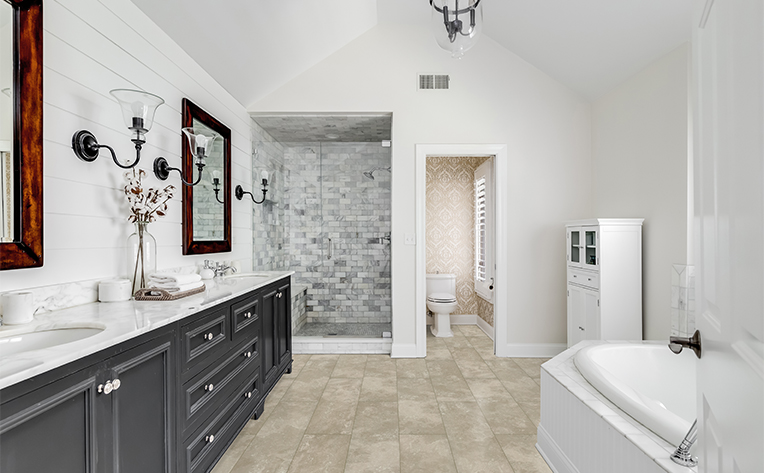
Bathrooms
Bathroom Flooring Trends for 2026: Matte Finishes, Rich Tones and Practical Care
← Back to Trends & Style Guide
Matte surfaces, richer colors and simpler maintenance offer a useful starting point for a bathroom update in 2026. The right floor still has to suit the specific room. A powder room, a family bathroom and a shower floor expose materials to different conditions, even when the finished spaces share the same color palette.
For Chico and Roseville homeowners, the practical question is how to translate a look you like into a complete, workable installation. Start with the bathroom's daily use, then compare finish, material, layout and care. A trend should help you narrow the choices without replacing the technical questions that protect the project.
1. What does a matte bathroom floor change about the room?
A matte finish reflects light differently from a polished surface and can give the room a quieter appearance. Its effect depends on the material, texture, lighting and color. Some samples disguise ordinary marks better than others, so compare the actual finish rather than assuming all matte products behave alike.
Set a sample near the vanity, then examine it under daylight and the lights you use in the evening. A deep charcoal tile may look dramatic beside white fixtures but show pale residue clearly. A warm, lightly varied finish may create a different maintenance impression. Ask how the product should be cleaned and whether its texture makes wiping up soap or residue more involved.
2. Is matte tile automatically slip resistant?
No. Appearance alone does not establish whether a tile is appropriate for a wet floor. Ask for the manufacturer's intended-use information and applicable slip-resistance data for the exact tile. A bathroom floor and a shower floor may require different selections.
Daltile's slip-resistance guidance explains that no floor tile is slip proof. The room's use, footwear or bare feet, water, cleaning residue and maintenance also matter. Discuss those conditions with the project team. Choosing a matte look should be a design decision supported by product information, not a shortcut around suitability checks.
3. Which bathroom flooring materials should I compare?
Compare materials that are explicitly approved for the planned location. Porcelain tile offers many stone, concrete and wood looks. Certain luxury vinyl products may suit a bathroom floor outside the shower. A laminate or wood product should never be assumed suitable simply because its label mentions water resistance.
Begin with tile and luxury vinyl samples that meet your use requirements, then review the installation and warranty documents. Ask about edges, plumbing penetrations, cabinets and transitions. For a powder room with limited water exposure, the discussion may be different from a bathroom used by children after every evening bath. Tell the specialist how the room is actually used.
4. Does waterproof flooring make a bathroom waterproof?
No. A water-resistant or waterproof surface does not automatically protect the entire room assembly. Water can reach surrounding materials through joints, edges, penetrations or an installation detail that was never designed to contain it. Shower waterproofing requires a coordinated system beneath or behind the finish.
Schluter's shower guidance explains why tile and grout alone are not waterproof. Ask who is responsible for the membrane, drain connections and transitions in your project. If you are changing a shower or tub, discuss those details before choosing a matching floor. A coordinated appearance is valuable, but the hidden water-management plan is what supports the finished room.
5. Can dark or earthy flooring work in a small bathroom?
Richer tones can work in a small bathroom when they are considered with the walls, fixtures and lighting. Dark flooring does not automatically make a room feel smaller, and pale flooring does not solve every lighting problem. The overall balance matters more than a single color rule.
Try a warm brown, clay-inspired or charcoal sample beside your vanity and countertop. Look at how much of the floor will actually remain visible after cabinets and fixtures are installed. If the room already has several strong finishes, a more restrained floor may help them work together. Keep the sample in place for a few days if possible and note when its appearance changes most.
6. Is large-format bathroom tile easier to maintain?
Larger tile can reduce the number of grout joints across a given area, but it does not eliminate grout or installation planning. The best format depends on the room's dimensions, substrate and layout. A size that suits the main bathroom floor may not be appropriate for the shower base.
Review where full tiles and cut pieces will land around the toilet, vanity and doorway. Ask how the installer will address the required substrate flatness and any changes in plane. Daltile's large-format installation overview highlights preparation, joint sizing and mortar coverage. Choose the size that works as an installed system, not simply the largest tile in the display.
7. What does low-maintenance bathroom flooring really mean?
Low maintenance means a routine that is realistic for your household and appropriate to the material. It does not mean the floor can remain wet indefinitely or tolerate any cleaning product. Surface texture, grout, sealant and the edges around fixtures all affect everyday upkeep.
Before ordering, ask for the cleaning instructions in writing. Discuss whether the tile or grout requires sealing and which products are compatible with the finish. Review how bath mats will be used and dried. If you prefer natural stone, understand its individual care needs before comparing it with a porcelain look. The better choice is the one whose appearance and maintenance requirements you are willing to live with.
8. What should a bathroom flooring estimate include?
The estimate should describe removal, preparation, material, installation, transitions and any work involving fixtures or waterproofing. It should also explain how concealed damage will be handled if the existing floor reveals a problem. A square-foot material price is only one part of a bathroom project.
Ask who removes and reinstalls the toilet, how the doorway height will change, and whether the vanity stays or moves. If floor warming is proposed, confirm that the complete flooring system is compatible and that the relevant trades are included. Agree on the sequence and room availability before work begins, particularly when the home has only one bathroom in regular use. Review finish and color in your bathroom lighting. Check the exact product for its intended location. Coordinate waterproofing, transitions and care.Your planning snapshot
How can I compare bathroom flooring locally?
Bring photographs, approximate dimensions, your vanity and countertop finishes, and a clear description of what is changing. Tell the team whether you are updating only the floor or planning a shower, cabinetry and lighting project at the same time. The scope affects both product selection and scheduling.
Visit Chico Carpet One at 2525 Dominic Drive #9 or Roseville Carpet One at 1109 Smith Lane to begin flooring comparisons. California Renovation's kitchen and bath services can support the broader remodeling discussion. Request an estimate and bring the practical questions with the inspiration photos; both are part of choosing a bathroom floor you can use comfortably.
Planning a flooring or renovation project?
Discuss your space, compare materials and plan the next step with our Chico or Roseville team.
Request your estimate