Home tips
Entryway Styling from the Floor Up: Seven Ideas for Chico and Roseville Homes
← Back to Trends & Style Guide
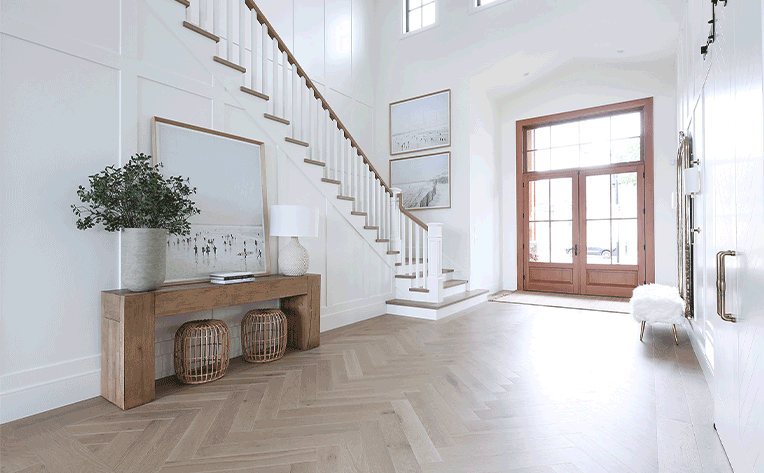
Photo: Trevor Cooper. Interior design: Trisha Isabey. Image supplied through Carpet One Floor & Home.
An entryway works better when it gives everyday items a place to land without crowding the route into your home. Start with circulation, storage and the floor, then add a table, lighting and a few personal objects. A welcoming entrance should still function when someone arrives carrying groceries, a backpack and a wet umbrella.
In a Chico or Roseville home, the entry might be a defined foyer, a short hallway or one corner of an open living room. You do not need to force all three into the same decorating formula. These seven decisions help you build an entry that suits the space you actually have.
1. How do I choose an entryway table that fits the walkway?
Choose the table after checking the door swing and the route people use through the space. Measure depth as well as width, then mark the proposed footprint on the floor. A console that looks modest in a showroom can interrupt a narrow passage at home.
Walk past the marked area carrying the items you normally bring inside. Open nearby closet doors and test whether drawers or baskets would project into the route. If a table makes the entrance awkward, a shallow shelf or a different storage location may work better. Decide what the surface must hold before buying it. A place for keys needs much less depth than a mail station, lamp and charging area combined.
2. What should I keep on an entryway table?
Keep the items that make arrival and departure easier, then add a small number of objects you enjoy seeing. A tray, a lamp and one personal piece can be enough. The goal is a surface with usable space left over, not a display that must be rearranged whenever you put down a bag.
Separate things you use daily from things you are temporarily storing. Mail awaiting attention needs a routine, while spare batteries and old receipts probably need another home. If several people share the entry, assign clear places for their everyday items. Try the arrangement for a week before buying organizers. Actual habits will tell you more than an idealized photograph of an empty hallway.
3. How can I add a mirror or artwork without overwhelming the entry?
Choose one primary wall feature and relate it to the furniture below. A mirror can reflect available light, while artwork can introduce color or a personal connection. Check what a mirror reflects from the doorway before assuming it improves the view.
Use paper to test the proposed size and position. Consider nearby switches, trim and the height of objects on the table. Secure the piece using hardware appropriate to its weight and wall construction. Heavy objects should not rely on an improvised arrangement. If the entry feels crowded, remove an accessory before adding another. A little open wall space can make a favorite piece easier to appreciate.
4. Which flooring makes sense for a busy entryway?
Choose entryway flooring around soil, moisture, traffic and the adjoining rooms. Tile, hardwood and suitable resilient products can each work in the right setting, but their installation and care requirements differ. No category eliminates the need to manage grit and wet shoes.
Describe the entrance honestly when you compare flooring options. Is it the main family door, a rarely used front door, or the route from a garden? Does a dog pause there after walks? A sample should be assessed beside the existing floors and at the threshold. The NWFA's maintenance guidance is useful if you are protecting an existing wood floor. Follow the exact product's care instructions for every other surface.
5. How do I choose an entry rug and pad?
Select a rug that fits the usable floor area, clears the door and stays stable with a pad approved for the flooring beneath it. An attractive runner becomes frustrating if the door catches it or its edges curl into the walking route. Test the total thickness of rug and pad together.
Do not assume every rubber-backed mat or pad is compatible with every floor finish. Ask about the selected flooring manufacturer's guidance and the rug's cleaning requirements. Keep a wet mat from remaining against the floor. Both Chico Carpet One and Roseville Carpet One carry area rugs. Bring the entry measurements and a photo of the threshold to compare practical sizes before settling on the pattern.
6. What lighting works around an entryway table?
Provide enough light to see the route, find everyday items and use the entrance comfortably. A table lamp can add warmth, but it should work with the room's existing lighting rather than leaving the rest of the passage dark. Position cords so they do not cross the walking route.
Check the scene after sunset as well as during the day. A mirror may reflect a bare bulb, while a tall arrangement can block the light you need on the tabletop. If you want a wall fixture or a new outlet, have the work planned and installed by the appropriate professional. You can refresh the atmosphere with a shade or lamp placement before committing to changes in the electrical layout.
7. How can I add seasonal style without creating clutter?
Keep the main furniture and practical storage consistent, then change one or two small elements. A textile, branch arrangement or piece of artwork can shift the mood without requiring a new table, rug and accessory collection every season. Choose changes that preserve the room's daily function.
Use a watertight container and protect the surface beneath plants or flowers. Avoid placing delicate objects where bags or pets are likely to knock them over. If you layer textures, repeat a color already present in the flooring or adjoining room. Photograph the entry from the doorway, then remove anything that distracts from the overall composition or crowds the place you intended to leave open.
What safety details should I check before finishing an entryway?
Check stable furniture, secure wall pieces, clear routes and rug edges as part of the design. Furniture anchoring is especially important where children may climb or pull on drawers. The U.S. Consumer Product Safety Commission's Anchor It campaign provides guidance on securing furniture to help prevent tip-overs.
Storage should not create a new obstacle. A basket that fits under a console is useful only if it stays there when full. A bench needs a sensible place for shoes so they do not spread into the path. Review the arrangement with the people who use the entrance and adjust it around their needs rather than expecting everyone to adapt to a decorative display. Test door swings and the furniture footprint. Give everyday items a defined place to land. Check rug stability, lighting and personal details.Your planning snapshot
How can I plan an entryway update in Chico or Roseville?
Start by separating the project into furnishings, flooring and construction. You may only need a better rug and a slimmer table. If damaged flooring, transitions or a larger layout change are involved, gather photos, rough measurements and the names of any existing materials you hope to match.
The local flooring teams can help compare surfaces and area rugs for the entrance. For changes that connect the entry to a broader remodel, California Renovation can discuss the surrounding project. Bring your daily-use problems along with your inspiration photos when you request an estimate. A successful entry should look inviting and make it easier to come home.
Planning a flooring or renovation project?
Discuss your space, compare materials and plan the next step with our Chico or Roseville team.
Request your estimate